Guidance in working with Air Drying Modelling Clay
Types and Brands of Air Dry and Fired Clay
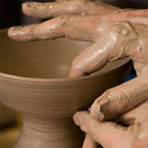 The most popular and timeless air drying or potters clay is Earthen Clay or pottery clay. It has been used by modellers since humans first tried to express themselves in art. Earthen clay or potters clay is however best fired to make it weather resistant and when glazed, water proof. As a modellers clay, sculptors use it as an inexpensive material for modelling a master from which a mould can be made. Sculptors clay shrinks a lot when drying. In thick sections it will therefore crack when drying or when modelled over an inflexible former like polystyrene. In recent times, Earthen Clay has been reinforced with nylon fibres and is available in the U.K. as ScolaClay and Newclay air drying clay. This gives it greater mechanical strength but will not prevent cracking in the wrong conditions.
 Then from Italy, many years ago, Giotto brought out the well known Das air dry clay. This is available in 500g and 1000g blocks in Grey and Terracotta. There are many similar semi artificial sterilised clays like Das on the market now. Some of these like Das modelling clay are produced from an air drying polymer clay. Das clay air dries to a tougher and smoother finish than standard airdrying earthen clay.
Paper clay is also a more recent phenomenon. It can be made out of throw away egg boxes or can be bought in bags as dry powder. Some of these are made from air drying polymer clays. Paper clay is less inclined to shrink and crack when drying and it dries much lighter in weight than earthen clay.
In our Craft Mill Internet Shop, we stock a range of air drying and potters clays. We stock Scola Air Dry Clay and Pottery Clay, Das and dry powder Papier Mache.
Modelling With SCOLA Earthen Nylon Reinforced Clay
The Scola Clays we have are either traditional potters unfibred clay, which is designed to be kiln fired and also the airdrying version which is a potter’s modelling clay with the addition of nylon fibres to give it better mechanical strength when airdried/unfired. This can be thrown, moulded and fired in a similar way to pottery clay. The clay has been formulated especially as a play clay for school children. This modelling clay is great fun to work with and is inexpensive and very versatile. Coming in large 12.5kg blocks its very economical for use with groups of all ages. ScolaClay air drying modelling clay is available in terracotta clay and grey clay. Both dry somewhat lighter than the supplied colour. The nylon reinforcing fibres are an excellent bonding agent which reduces brittleness and means that the clay need not be fired and can be painted and varnished with acrylic paints or varnishes.
For more durable models, the potters clay can be fired and glazes applied.
Instructions for Use

Always keep your Scolaclay in a closed container, sealed from the air. The original packaging is ideal if there are no holes in it otherwise double pack. If the clay dries out, break into small pieces, put them into a small polythene bag and sprinkle water on them, and leave until soft and workable again.
Before starting think carefully about making your model and make crude sausage or ball shapes to represent the object, e.g. a dog might comprise a ball for the head, a sausage for the body and thin sausages for the legs. Bearing in mind the clay won’t hold up weight like legs to bodies, think about using wire, sticks (dowel) and other reinforcers to form your clay around – this also saves weight and clay
Next join the bits up and make sure they are well moulded to each other otherwise something is likely to fall off. Now you can start with surface features like noses, eyes etc. You can also add other materials like wood shavings, leaves, seeds and endless other things to enhance your model. The only limit is your imagination
Larger Models
If you want to make large models, it is unnecessary to make these entirely out of Scolaclay, as they might use up too much of your clay and be too heavy.
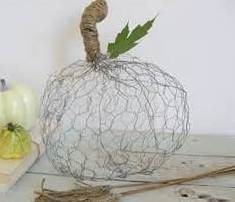 An excellent light weight former is chicken wire. Chicken wire should flex as the clay dries which should help reducing cracking. Flexibility in the armature is very important otherwise the clay is certain to crack as it dries. It is also important to use thin slabs of clay. The thicker, the more likely it is to crack as it dries. You can also use tightly bunched up old newspapers but these are too springy for me yet will give as the clay dries.
Having got your basic shape you can now start clay modelling in earnest by making long sausages and wrapping your model in it or forming thin slabs and layering your model with it.
If your model is to be left for any time and needs work to continue on it, get an old towel, wet it, wring it out and drape the damp towel over all of the clay surfaces, thereby ensuring that it is immediately ready to work on when you come back to it. To prevent the towel drying out, use a garden spray and regularly dampen your towel.
Block Printing
ScolaClay can be used very well to do printing. You can either cut your pattern out of a chunk of clay (like potato printing) or press blocks against a rugged surface to create a textured print. Use clay that has other material sunk into it, to create even more unusual patterns.
Making Containers
The clay, unfired and unglazed is not suitable for holding water, so it is not good for making pots unless they are to be used for non liquids like dried or artificial flowers.
Using suitable glazes and firing the clay will give you a waterproof container.
Modelling in Relief
Scola Clay can be used to make very large or small items and after it has dried out can be glued using P.V.A. glue to cardboard tubes, boxes or hardboard. Many pattered objects can be made in this way, for example pictures and decorated boxes. Push moulds and clay cutters are a handy way of easily producing complex shapes. These can be found in the Craftmill Shop
Finishing the Model
Water based paints work very well with Scola Clay but before you finish your model, you can use heavy duty pva glue or acrylic gloss varnish to stick paper, powders, sand, seeds, sawdust, etc., to the surface.
If you want your colours to glow, coat your model in white, acrylic primer undercoat, then paint it. Good quality water based paints are ideal. Craftmill carries a huge range of colours in Acrylic painting materials. The acrylic paints are available in both hobby and artist qualities. You can also use oil based paints (messy to clean brushes) but your model must be very dry if you use oil paints.
Having painted your model, you can then varnish it to bring up the colours and to give it that extra coat of protection. Acrylic water based varnishes work very well and are easy clean (brushes). When dry, acrylic varnish does not wash off and is water resistant.
Firing ScolaClay
Scola clay is not designed as a firing clay but if you have a kiln and want to fire your work, ScolaClay fires very well. Your kiln should be set in the range of 1000°C to 1250°C. You can glaze as you would any other clay you might use.
You can also buy pottery clay from Craftmill. Our 12.5kg potter’s clay is also available in in terracotta clay and stone clay.

